Today it’s the done thing to espouse authenticity, but isn’t delivery the ultimate test of leadership? In businesses and organisations, authenticity is a key component of what we call culture. But are the fine words, the passion, the verbal commitment prized above actually delivering the promise? So often I’ve observed executive team meetings with praise and thanks for those who agree to take on a new task, but little time being spent reviewing whether last month’s promises have actually been delivered. Embracing new initiatives gives the illusion of action and progress, but can leave a string of owned promises undelivered. For the audience of this performance, it is pure theatre. They can applaud with vigour as they know the next act will be different and will actually deliver no more action than the former. Long ago, on asking a Director why he worked for the newly privatised British Gas replied, it’s the politics, the theatre, it’s such fun… He was a Stage Performer.
The Wise Implementer on the other hand delivers what they say they’ll do. Even in a tough, uncertain economy, they are able to balance delivering today’s targets with laying the groundwork for the organisation to flourish in the future, using the learnings from execution to build trust and confidence across the business.
Leading Change in a Perfect Storm
OE Cam recently hosted a dinner-debate focussed on how to build value and deliver transformative change in a ‘perfect storm’. Our guest speaker was Paul Donovan, a seasoned CEO, now Chair, with significant experience turning around challenged businesses.
Paul took us through learnings from three major transformations he had led:
- The creation of Vodafone Ireland from the state controlled Eircell
- The turnaround of eircom (now eir), the Irish telecoms provider and
- Odeon Cinemas across Europe.
Each situation was different, but all were highly complex, involving transformation across multiple interconnected elements:
- Addressing fundamental funding constraints – often due to unusually high indebtedness
- The need for product and service reinvigoration aligned with a new strategy
- The enabling opportunities from new IT systems
- Regaining degraded customer confidence to grow revenues
- Building a platform for cultural change – the key to unlocking potential.
… All in fast moving and highly competitive markets, sometimes made worse by economic recession – in short, perfect storms.
“You might think then that I am accustomed to operating in a perfect storm. And you’d be right. Accustomed yes, comfortable no. The first thing to say is that skippering a boat in a storm is scary. It’s disorienting. Visibility is often poor. The force of the sea and the elements is way more powerful that your boat is. Your crew and passengers may be less experienced than you’d like. You may have ventured further than normal from safe harbour. Your insurance might not cover the boats replacement costs. And, as no two storms are alike, you can’t know for sure how long it will last and what will play out. No matter how experienced you are, you will be wondering whether you actually have it in you to get your vessel its crew, passengers and cargo back to dry land safely. It’s a high adrenalin environment.”
Reflections from a Wise CEO…
Paul’s reflections are crucial for implementing enduring change and say much about the nature of leadership in building sustainable value.
The role of the leader is vital and entirely dependent on that person being able to convince others to embrace the change. This is even more important in a downturn when some managers may push back on pursuing growth strategies. To help the CEO develop their impact and influence, they must ensure they continue to:
- Activate their Chair as their mentor – two heads are always better than one
- Ensure trusted special relationships, particularly with the CFO and CPO to actively reshape the financial and cultural context of the business
- Actively broaden their own perspective, engaging with other leaders who have experienced similar challenges
- Role model ‘confidence with humility’ – by seeking out help from all levels in the business and by embracing reverse mentorship.
You must ask yourself whether the leadership team you have is the right one for the future, and the sooner the better. No-one ever regrets moving too quickly on exiting those who are not up to the journey. Look for talent potential further down the organisation – this will both embrace the need for institutional memory and allows for individuals to thrive when trusted with a mandate.
Engage your staff through honest feedback, and empower agility by giving autonomy to the lowest level possible. This of course involves higher levels of trust. But since Covid, many more mature leaders have shown themselves to be really challenged in how to both understand and relate to younger colleagues with completely different expectations and values that must themselves be balanced against customer and business needs. We have seen the generational “battle for supremacy” over new workplace norms such as hybrid working. CEOs reared on the physical proximity of the office believe that opportunities for learning and engagement are a direct product of the physical environment, while digital natives value the personal and financial benefits of freedom and independence.
Over time, through test, learn & adapt, a ‘new normal’ based on trust and understanding will surely emerge. Without it, it will be much more difficult to drive the change that faces us all.
Building Sustainable Value: the 7 big takeaways
1. Don’t overlook the importance of clarity of purpose, values and behaviours. Most people have an intrinsic motivation for wanting to think that what they do at work matters – so codify it for them.
2. Move quickly to build a broad community of genuinely authentic leaders who are prepared to demonstrate belief in the face of adversity and are willing to be held to account for delivery. Move on those who are not.
3. Script a compelling narrative to engage all stakeholders based on doing things which will help you win in the marketplace. The platform must be understood to be burning.
4. Listen and engage with your people by creating safe psychological places to build trust and understanding.
5. Embrace the importance of culture as an enabler of strategy. It’s “what happens round here when no-one is looking” and positive culture can be a vital underpinning for change.
6. Make complex, often interrelated, changes more relatable by packaging and communicating the “Vital Few” – those truly essential things that really matter across the company and that impact the many. In doing so, alignment will follow.
7. Finally, in any transformation, things will always pan out differently to what is planned. If you make it OK for people to fail “fast and often” and reward those who learn from failure, as well as those who succeed, you will start to develop the agility you crave.
Paul, our Wise Implementer, left us with two final thoughts:
“I have a phrase that I use all the time – because I have found time and again that it is true. It is that organisations don’t change – people change organisations. That is to say that there is no substitute for having the right team around you. If you were on a boat in a Force 8 you’d quickly work out who was made of the right stuff and who not. So why do we often make such a mess of this in business?
“Finally, my recent experience is how different it feels to lead in a post-Covid world. Expectations of life, never mind work have changed fundamentally. The challenge of the hybrid workplace is a riddle yet to be adequately answered. The emotional intelligence demanded of leaders has never been a greater premium. Certainties that have held good for twenty years are being confounded by new realities. Has there ever been a better time to be a leader?”

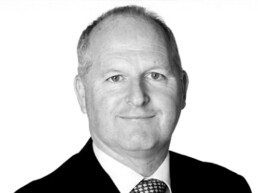
PAUL DONOVAN
Paul Donovan is a businessman, investor and philanthropist. After leadership roles with organisations such as Coca-Cola, Apple and Vodafone, Paul went on to specialise in turning around challenged private equity backed businesses, including CEO roles to transform Odeon and Arqiva, creating shareholder value and driving positive cultural change.
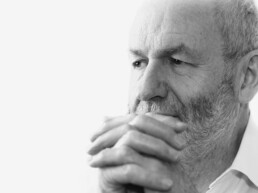
MARK GOODRIDGE, CHAIRMAN
Mark is Chairman at OE Cam and has built a reputation for his effective facilitation and development of Boards of Directors in both the public and private sectors. This has taken him to several countries and across a wide spectrum of organisations. His incisive and clear thinking, combined with his application of robust methods and tools, provides his clients with meaningful outcomes that add real value to them as individuals, as a Board and as a business. Mark’s focus is on better business outcomes, on supporting while challenging Board effectiveness, on enabling greater personal and collective effectiveness.