So let’s first consider how we’re all getting used to a new way of working post pandemic. A question that many leaders are still grappling with is whether to prescribe how often employees should be in the office. Mark Zuckerberg is quoted as saying “an internal analysis of employee performance data suggests that engineers who work in person, get more done”, and he’s encouraging employees to be in the office more often, as are many other CEOs.(1) As a leader, how do you navigate that decision as to whether to mandate people into the office?
Reference. 1. Zuckerberg – CNBC news, 15 March 2023 https://www.cnbc.com/2023/03/15/mark-zuckerberg-says-meta-employees-who-work-in-person-get-more-done.html
Well, I mean, if you mandate 100% of people should be in the office 100% of the time, that is very straightforward, there’s no ambiguity in that. Where it gets tricky is when you start going hybrid. We see with our clients that employee feedback about their working situation and positive engagement with work is strongest where management is flexible in its approach to hybrid – where an individualistic, adaptable approach is taken rather than being rule-bound. Employees are more productive with greater positive well-being. What’s also indicated is clear objectives about performance rather than presence.
There are links to autonomy here and your earlier point about leaders relinquishing control – how empowering employees to make those decisions can improve performance.
Yes, the focus should be on outcomes and output – not presence and absence.
Absolutely. What about the generational angle? There’s a belief that the younger generation are prioritising a greater work-life balance, preferring to work for organisations that offer the option to work remotely, more flexible hours and even bringing their dogs into the office. How can leaders both learn from this new generation and better manage them?
Well certainly have dog biscuits in the office as a starting point!
And remove the office carpets…
Yes, remove the carpets! One thing that’s becoming more commonplace is the notion of reverse mentoring – younger people are coming in, having fresh approaches, being tech savvy, digital savvy, social media savvy and the older generation learning from them.
And the other thing we are seeing across our clients which I think is really important, is the whole notion of the Employee Value Proposition. The EVP is much higher up the agenda in organisations that are doing well: how do we attract, recruit and develop talent that really connects with our mission and our purpose? One of our clients is a FTSE 50 engineering firm. Its employees are getting very excited about the fact that they have a positive impact on the environment. An organisation may have, and always had, a strong EVP, but it is really important nowadays for leaders to make sure it is articulated loudly, clearly, and consistently. Bring it to life! Celebrate it!
That links nicely to the positive psychology term “flourish” where Seligman (2011) proposes there are five foundations to flourishing. One of which is having purpose and meaning in life and work, along with dimensions of positive emotion, engagement, positive relationships and accomplishments. So how can we help leaders to foster these foundations within their teams?
So positive feedback when it’s merited is definitely an important thing for leaders to have front of mind. Feedback should be regular for ongoing development, not simply every six months or every year for a performance review. Give Jodie feedback that she’s done a good job in x project: tell her right away, tell her why, and point out what she’s doing well, so you create a feedback culture that emphasises learning and development. If things are not going well, you also should pick that up quickly.
Creating a feedback culture is really important to underpin that positive psychology and it should be positive feedback – that doesn’t come naturally to a lot of leaders.
Yes, it is often easier to give advice as to what could be done better…
Exactly, rather than “actually, that was really good and why it was really good” – that’s what we would say that you should be doing on an ongoing basis, it is very motivational and rewarding for the employee. Leaders can be trained to do this: in our view they need to be consciously competent around giving positive feedback when it’s merited.
Especially if they know what they’re doing well, they’re more likely to then do it again, aren’t they?
Exactly. Yes.
A decision that many leaders are facing this year is how do you deliver today’s targets in such a difficult economy while also building for the long term. I’m thinking particularly in regard to Sustainability or ESG. What advice would you give leaders looking to implement more sustainable approaches?
Well, they need to be aware of the three time horizons – in other words, they’ve got to deliver on the short, medium and long-term simultaneously. It’s all very well having an ESG aspiration, and suppliers could meet the standards for ESG more comprehensively, but one can’t just change suppliers overnight. Sustainability isn’t easy – it is a longer game, that needs short and medium term goals and steps built in, alongside the existing business as usual short term targets.
A sector that I find interesting in regard to the Sustainability agenda is Investment Firms.
We are currently working with investment professionals who are primarily responsible for ESG in top investment firms. Historically investment teams would pass the deals to these advisors for an ESG opinion. Now, with our help, the ESG advisors are actively working to increase their investment colleague’s level of consciousness and capability to analyse environmental and social impact of potential investments themselves, allowing the ESG advisors to become thought leaders, developers and influencers.
There’s a danger that ESG teams can perhaps operate in silos. The focus for many at the moment is gathering data to ‘measure and report’ against the Sustainability Development Goals (SDGs). But for sustainability initiatives to be successful, the ESG professionals need to maximise their own impact within the business: be bold, be articulate, develop capability, promote understanding, empower others whilst influencing the operators in the organisation to take ownership of their specific sustainability goals to turn the aspiration into action.
Definitely. And you mentioned bold. How can leaders determine how bold to be in this sort of thing when considering these time horizons?
Meeting the SDGs may require some big, bold moves. But there’s no point making bold decisions if you can’t take people with you. There’s a large element around influencing stakeholders effectively. They need to think through who their key stakeholders are, who their customers are, their employees and the need to navigate those different stakeholder groups. And they need to be very good at influencing and building relationships. And the CEO needs to be seen as a partner for ESG across these three time horizons. There will be things they can do today, things that they can do tomorrow. And the bigger things may need bold moves. But in order to keep their stakeholders on board, they need to work in partnership with them, so they need to be good at navigating internal and external networks, to be prominent in paving the way.
So thinking more about the three time horizons, are there any examples with clients that you’ve worked with where leaders have either failed or succeeded in considering the time horizons and how has that played out?
Yes, another of our clients, a FTSE 100 company with a decentralised business model was spending millions of pounds on a new HR information system. On the surface, it seemed like a great idea to standardise and centralise. However, it would mean centralising a range of decisions that typically were made within the businesses. So in the short-term, the decision to have it was a good one. However, for the longer term careful thought is needed about how to implement it as the HR system could change their entire operating model and impact the DNA of the business where business unit autonomy has been a powerful ingredient. They were prepared to challenge the traditional assumption that a standardised system was best and see things from a different perspective.
And I suppose the last question is around how organisations can ensure they have leaders who are equipped and prepared to give themselves and their teams the best chance to flourish? What can they do?
They can assess and develop those capabilities. And look for leaders that are adaptable, curious, collaborative, and bold.
How can they do that?
By doing a comprehensive assessment, ideally incorporating insights from a psychometric tool. And then by developing it. Encourage curiosity. Encourage collaborative working. Encourage leaders to challenge traditional approaches, to step away from the hierarchical approach, and adopt a more tailored approach.
And being humble enough to realise you can always learn from others. Like you said earlier, through reverse mentoring for example.
Exactly.
Do you have any final comments on how leaders can enable others to flourish?
To flourish in uncertain times, I think it helps to focus on the why of work. Understand the purpose and that becomes your beacon. Why are we doing what we’re doing? Not just what, how, when and where of work, but why.
And that can be applied to any industry at all. You know, the classic example of asking the janitor at NASA what their job was and they responded with “I help to put a person on the moon”. They understood the why.
So, what can leaders do? They can be role models of the why we come to work and then champion the how through storytelling; creating a compelling narrative with real clarity of purpose to help build a foundation for the organisation to flourish. And as one Wise Implementer in my colleague’s article says “Organisations don’t change. People change organisations (and as a leader), there is no substitute for having the right team around you… create a community of genuinely authentic leaders who are prepared to demonstrate belief in the face of adversity and be held to account ”.
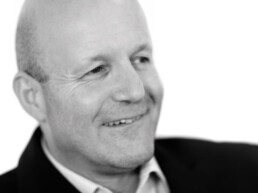
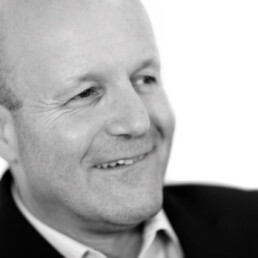
MARTYN SAKOL, Managing Partner
Martyn is a Chartered Psychologist and MBA, with over 20 years experience in leadership and management assessment and development across all sectors, both in the UK and internationally. The focus of his work is to maximise the effectiveness of individuals, teams and organisations.

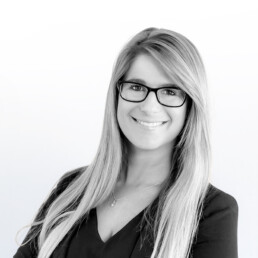
JODIE HUGHES
Jodie is a Business Psychologist in OE Cam’s Talent Management practice. She has a keen interest in understanding the role individual differences play in the workplace; specifically how strengths, weaknesses and preferences impact the way people work individually and as part of a team. She applies a broad variety of psychometrics with her clients and is experienced in designing and facilitating leadership development to enable individuals to work more effectively.